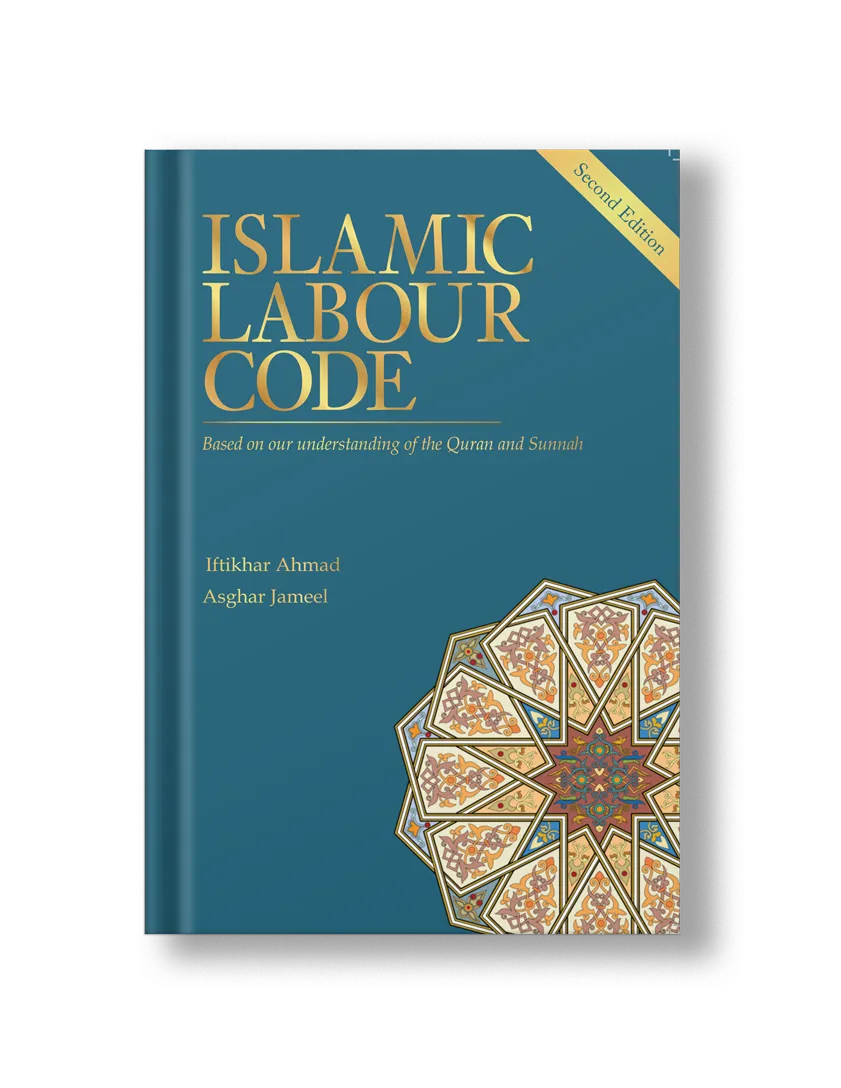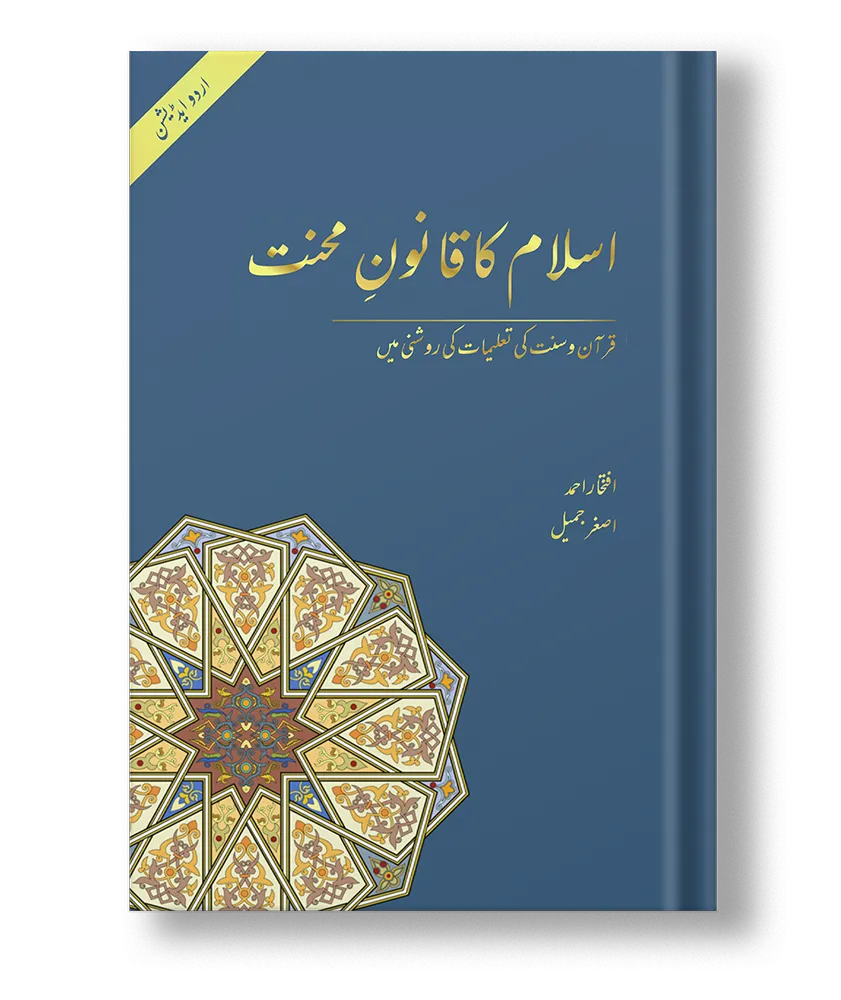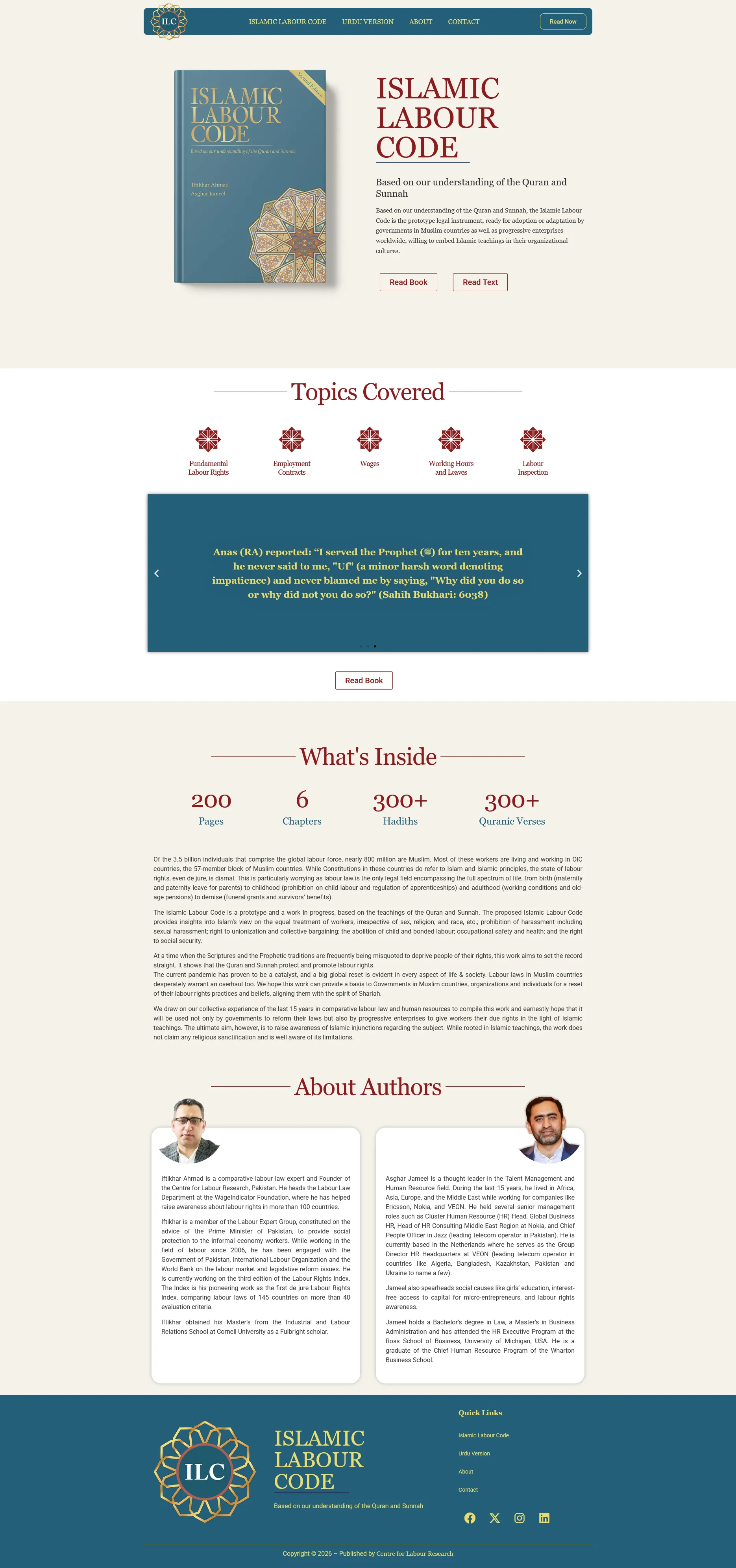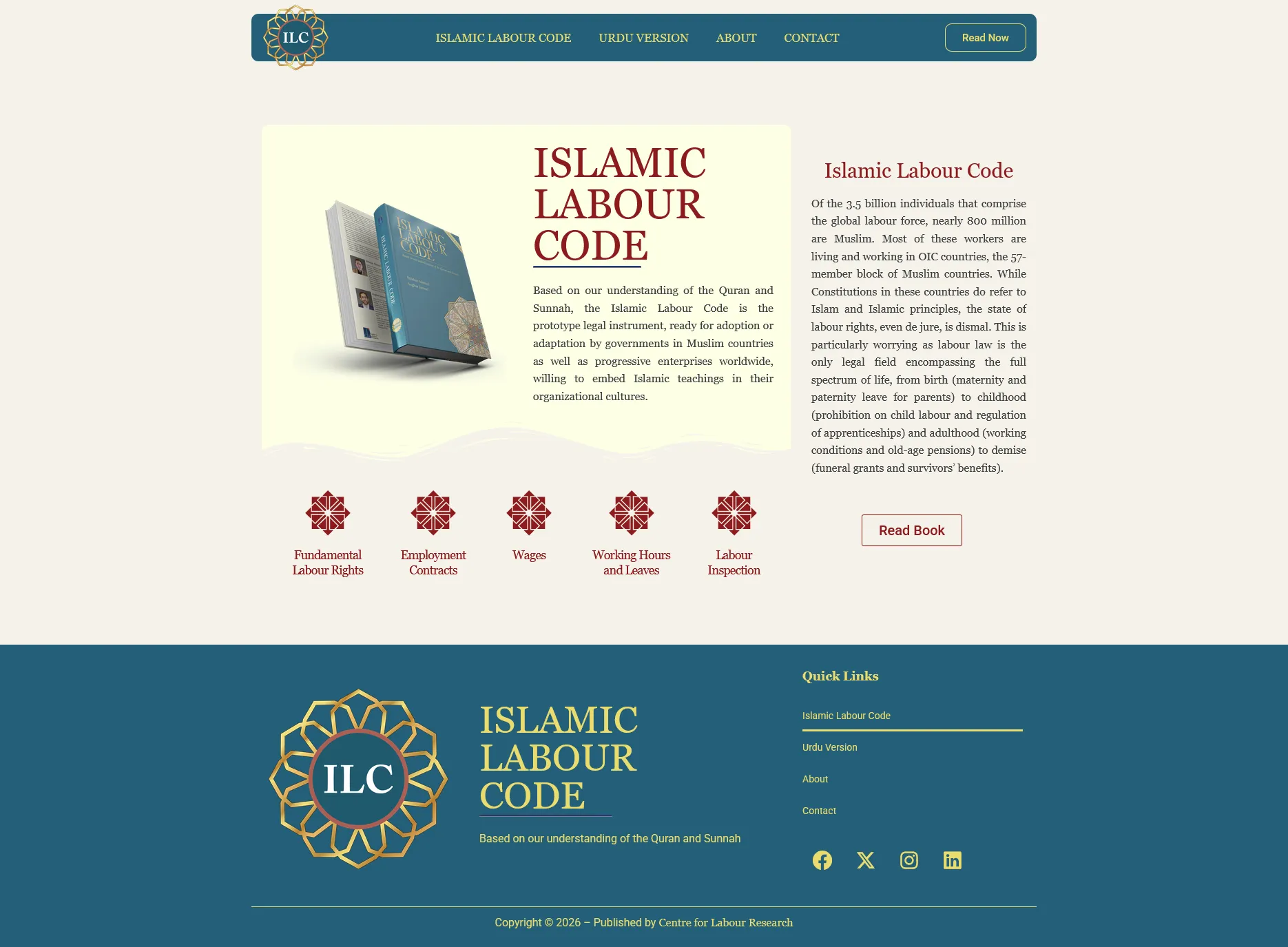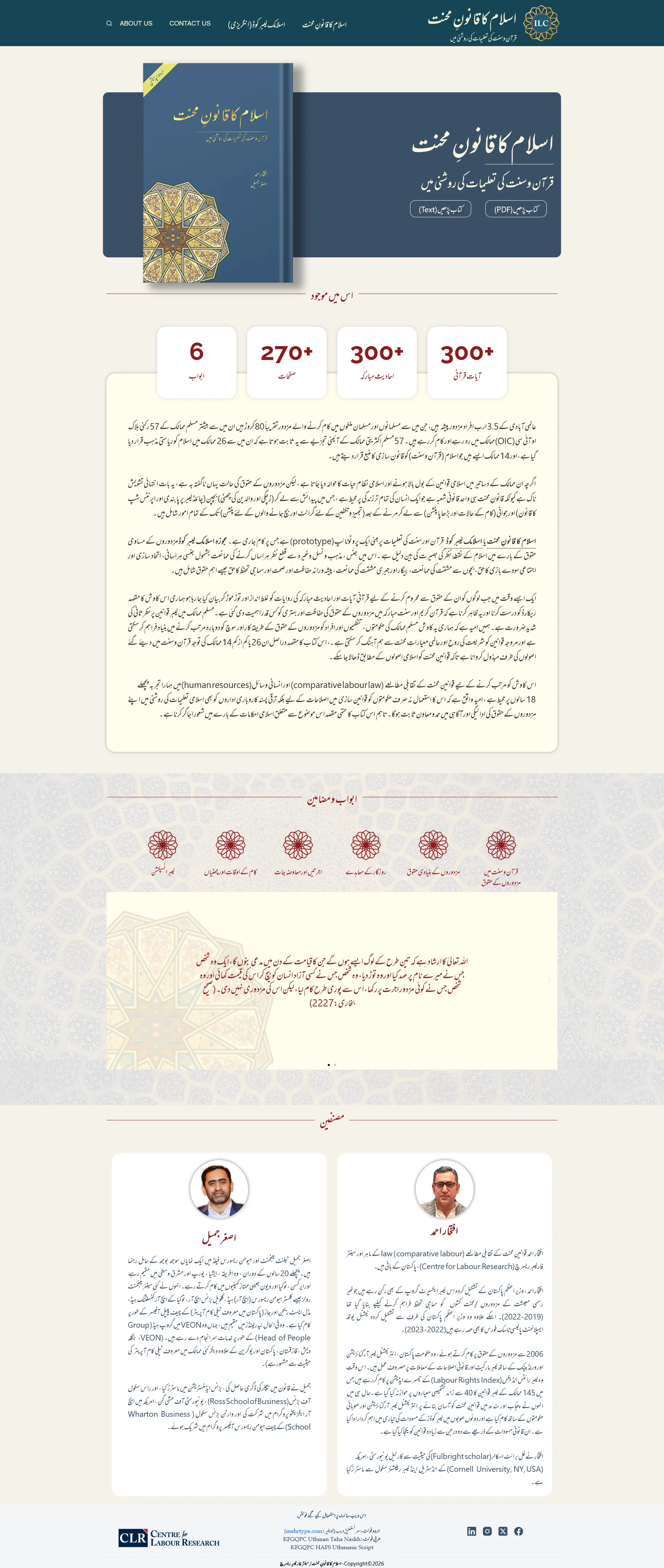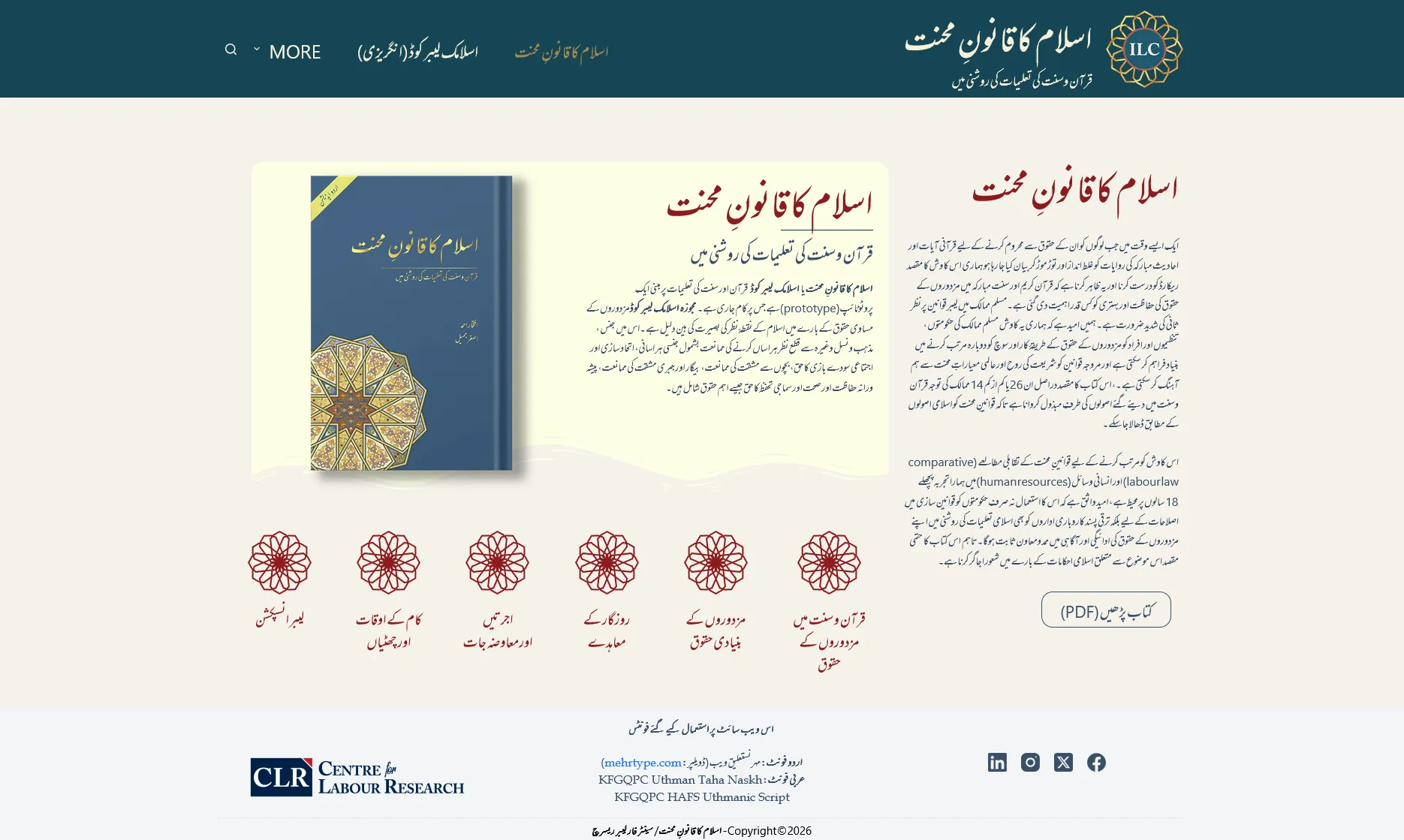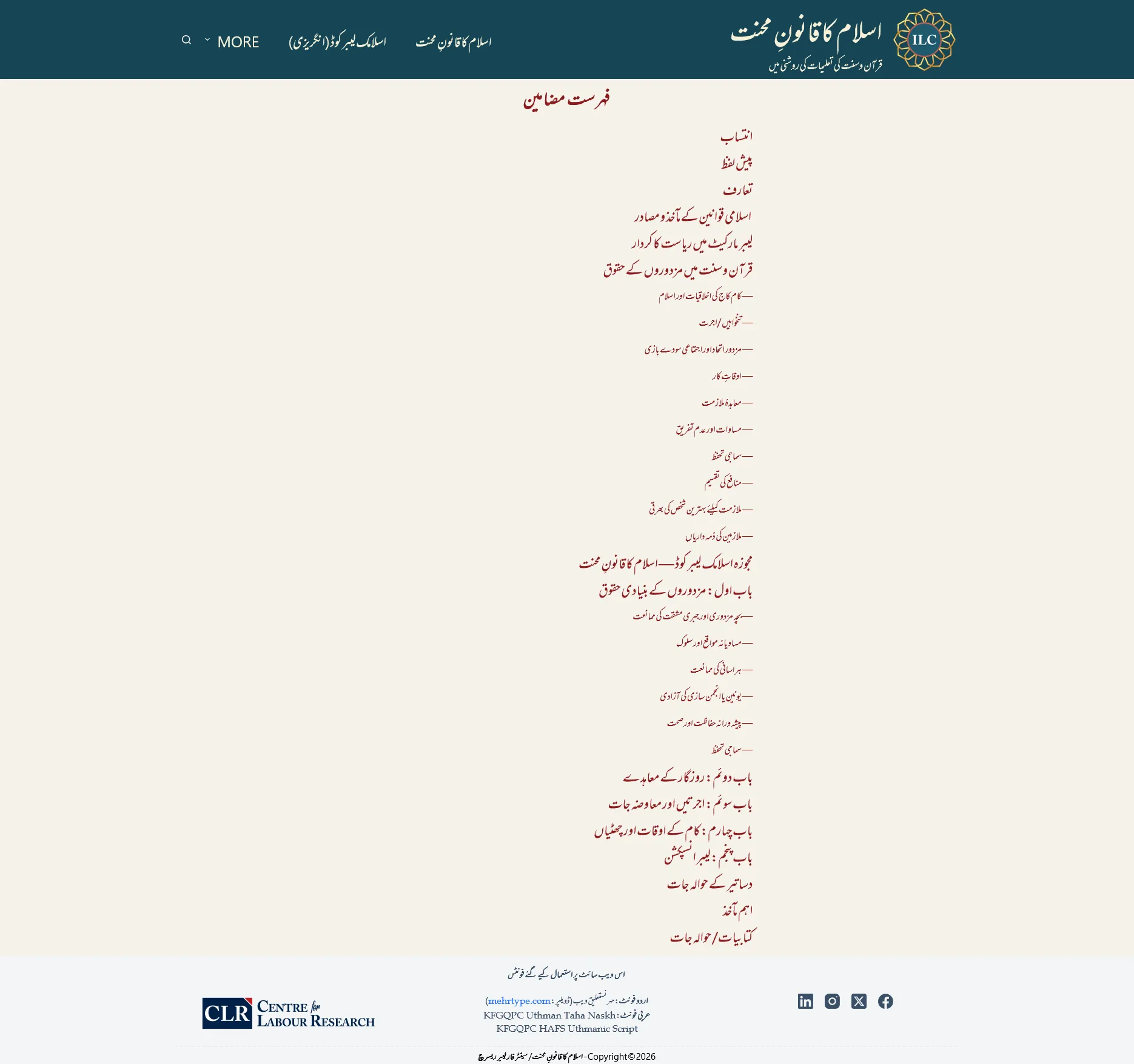
The Islamic Labour Code is an in-house Centre for Labour Research publication, not a freelance commission — built and maintained as part of my ongoing role as CLR’s Graphic Designer & Visual Content Lead. Co-authored by CLR founder Iftikhar Ahmad and HR expert Asghar Jameel, it grounds labour rights in Quranic and Sunnah teachings as a prototype legal instrument for adoption across the 57-member OIC bloc. The project spans two full editions — English, first published December 2020 and revised July 2021, and Urdu, designed and published in mid-2024 — each carried from book layout through to a dedicated website, and it remains active today with a 2025 addition of flipbook-style reading for both languages.
The Challenge
CLR needed the Islamic Labour Code to do double duty: read as a credible legal-academic reference for governments and international organisations, while also being approachable to religious and lay audiences who’d relate to it through scripture rather than statute. That meant every citation of the Quran and Hadith had to appear in correct, respectful, properly formatted Arabic — not just transliterated or paraphrased — sitting inside an otherwise fully English, and later fully right-to-left Urdu, layout. Publishing the same authority in two structurally different scripts, without either edition feeling like an afterthought translation of the other, was the core brief.
Design & Identity
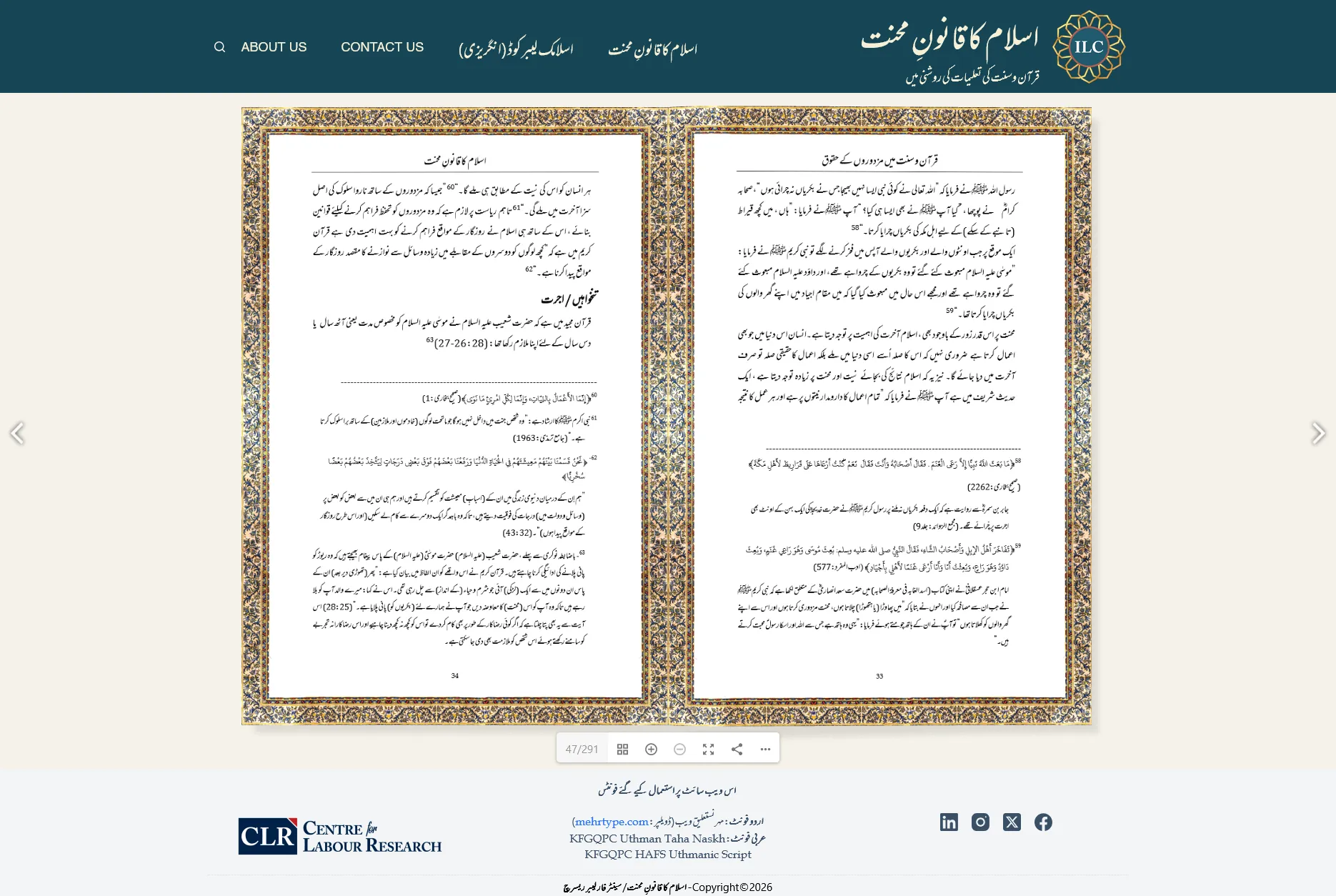
Each edition got its own cover treatment and book layout — English first (December 2020, revised July 2021), then a dedicated Urdu cover and interior design in mid-2024 — carrying the same Islamic Labour Code mark across both sites. The typography was the real design decision: body Urdu runs in Mehr Nastaliq Web, one of the few web fonts that renders Nastaliq’s diagonal, stacked letterforms properly instead of flattening them into Naskh, while every Quranic verse and Hadith citation in both editions is set in KFGQPC Uthman Taha Naskh and KFGQPC HAFS Uthmanic Script — the same Mushaf-grade Arabic typefaces used in official Quran printings. That distinction mattered: scripture needed to look like scripture, not generic web-Arabic.
Technical Execution
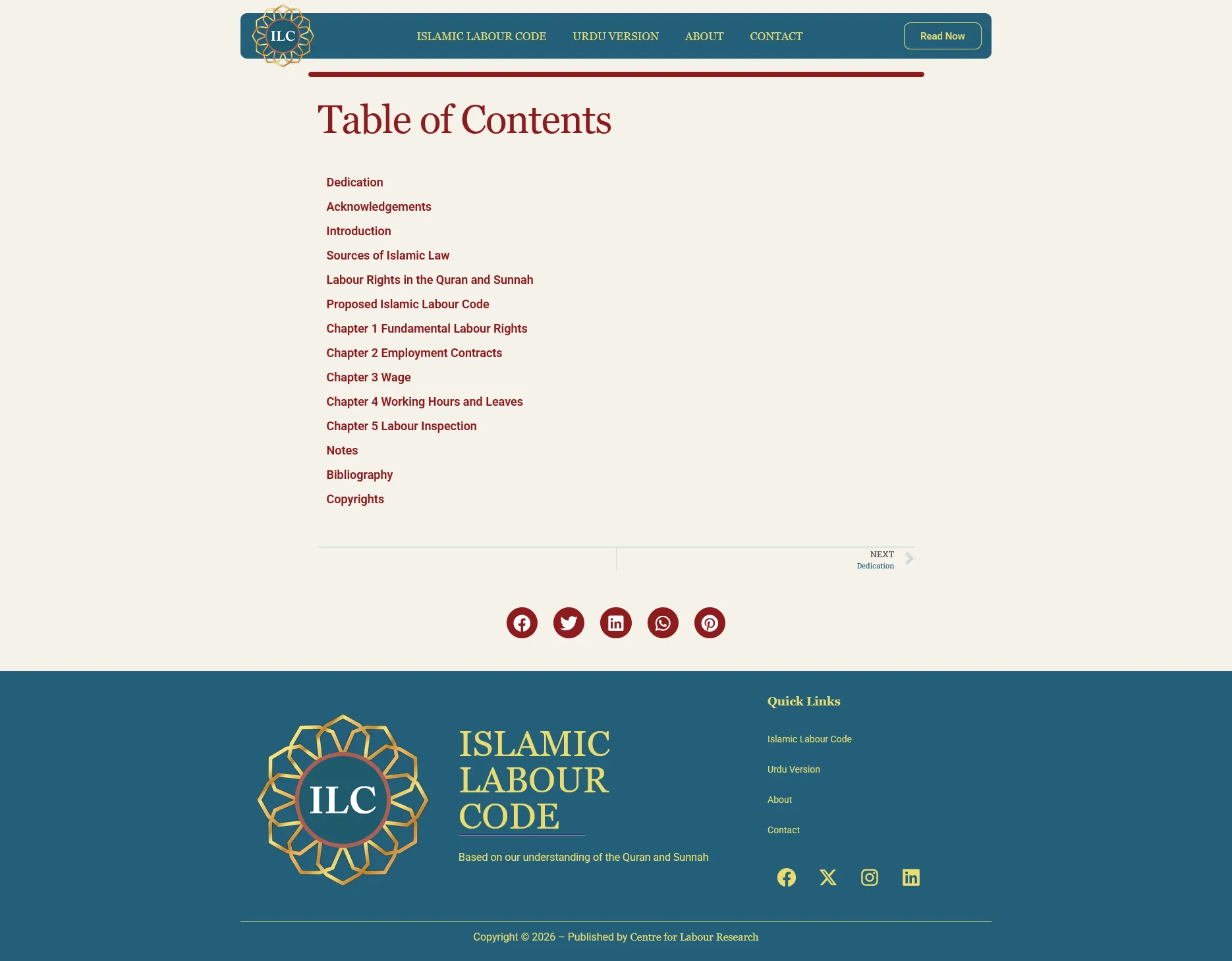
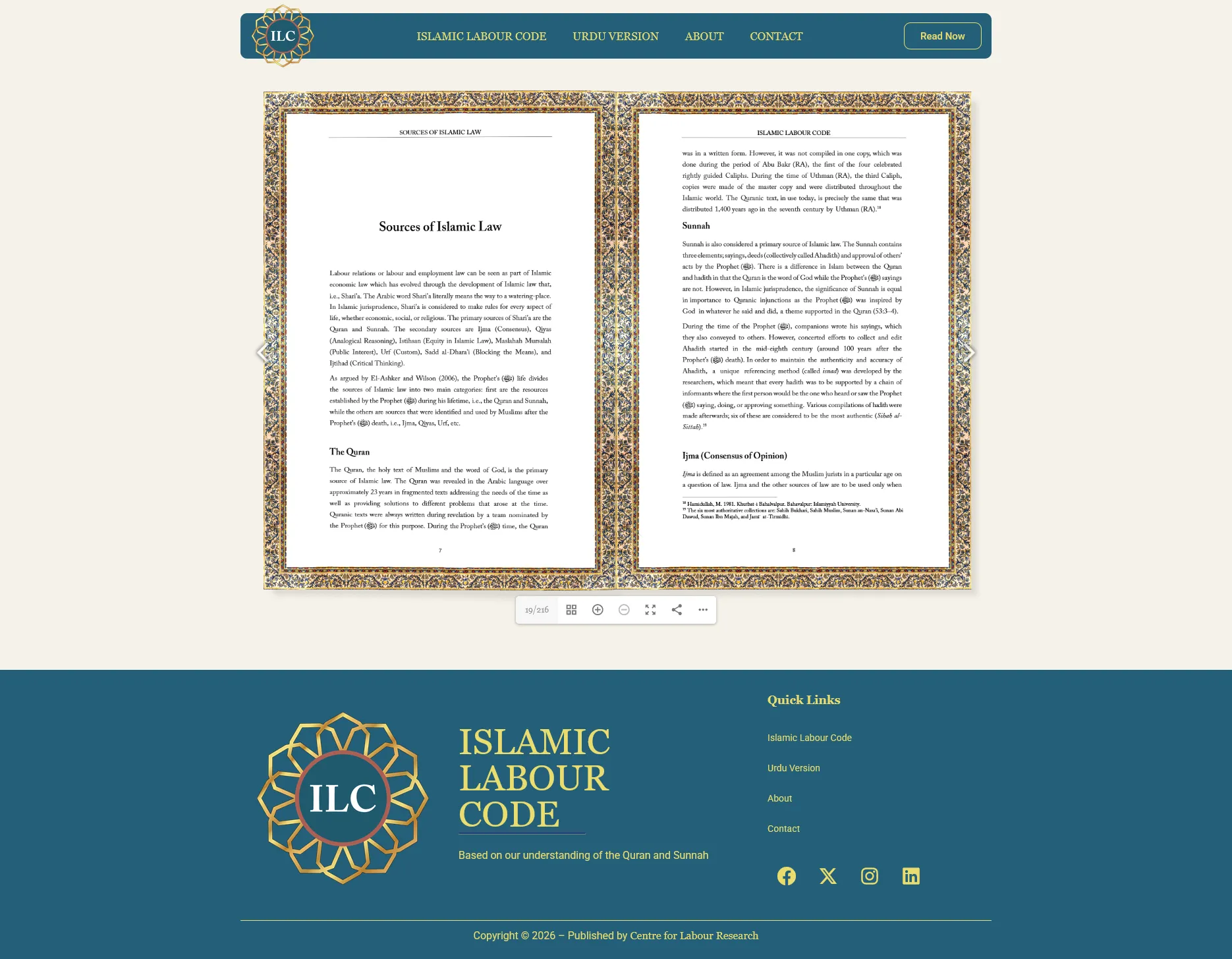
Both editions run as separate WordPress/Elementor builds — the English site at the root domain and the Urdu edition as a full right-to-left instance rather than a bolted-on language switcher — each offering readers two ways in: a page-turning flipbook viewer deep-linked by chapter, and a lightweight text version with every chapter published as its own standalone page for accessibility and search. Live counters on both sites tally pages, chapters, Hadiths, and Quranic verses to reinforce the scale of the sourcing. The most recent phase of work, in 2025, converted both the English and Urdu editions into the flipbook-style reading experience, layered on top of the existing text publication rather than replacing it.
The Outcome
The Islamic Labour Code now stands as a live, dual-language reference alongside CLR’s other flagship work like the Labour Rights Index — still maintained and still growing, most recently with the 2025 flipbook rollout. It gives CLR a resource that speaks in the register its intended audience already trusts, backed by typography precise enough to carry that trust into the Arabic text itself.